| << ROMANIA << EUROPE |
VORONET
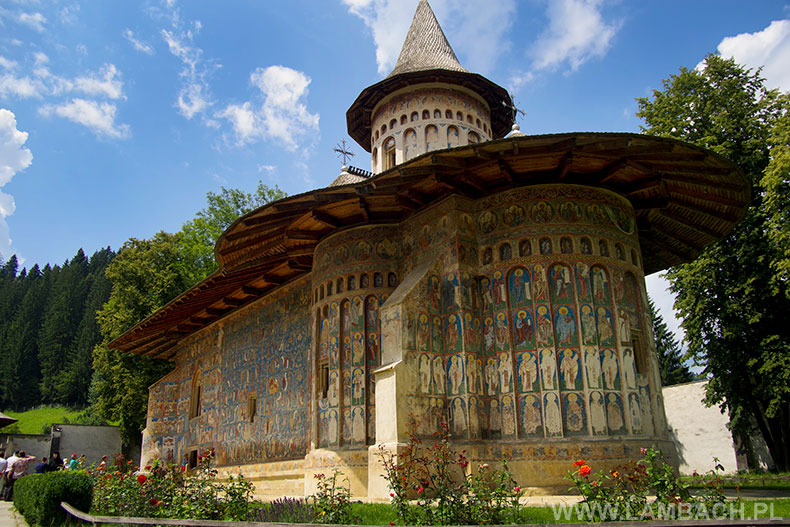
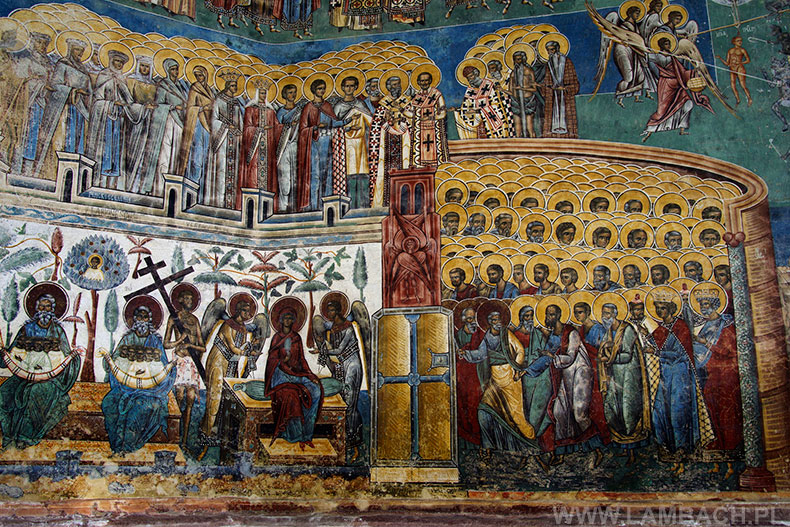
Perhaps the most famous and stunning of the painted monasteries is Voronet, founded in 1487 by Stephen the Great to celebrate a victory over the Turks. Widely known throughout Europe as "the Sistine Chapel of the East" due to its interior and exterior wall paintings, this monastery offers an abundance of frescoes featuring an intense shade of blue commonly known as “Voronet blue”.
ARBORE
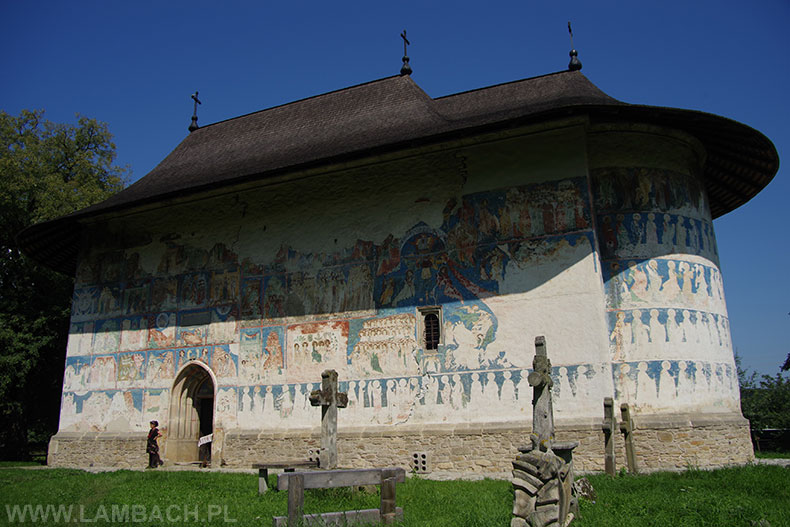
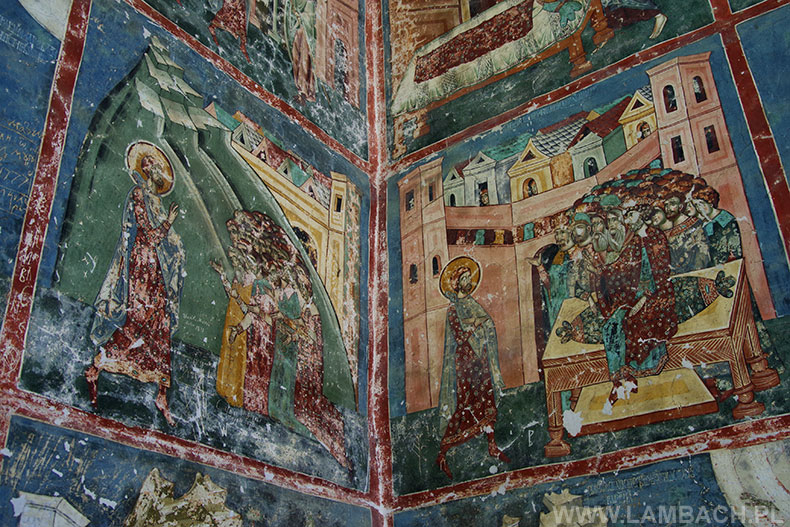
The monastery was founded in 1503 by Luca Arbore, the advisor of Stephen the Great. It was painted four decades later by Dragos Coman, one of the greatest 16th century mural painters of Romania,
PATRAUTI
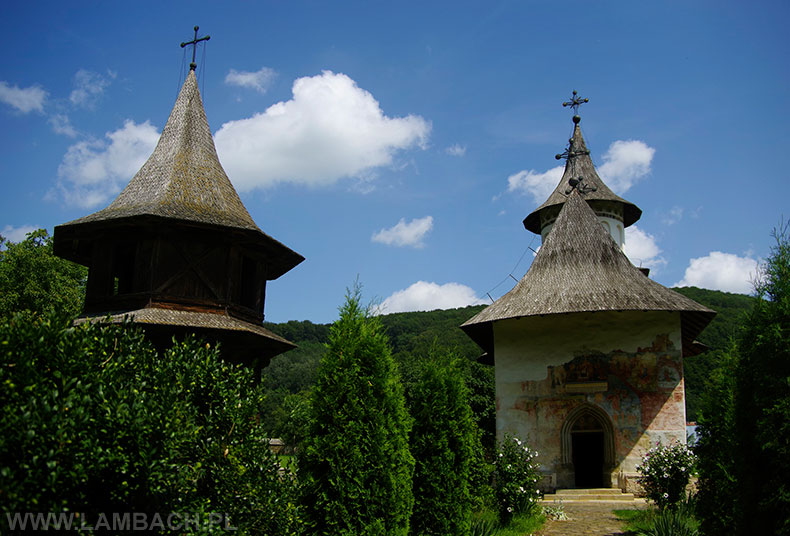
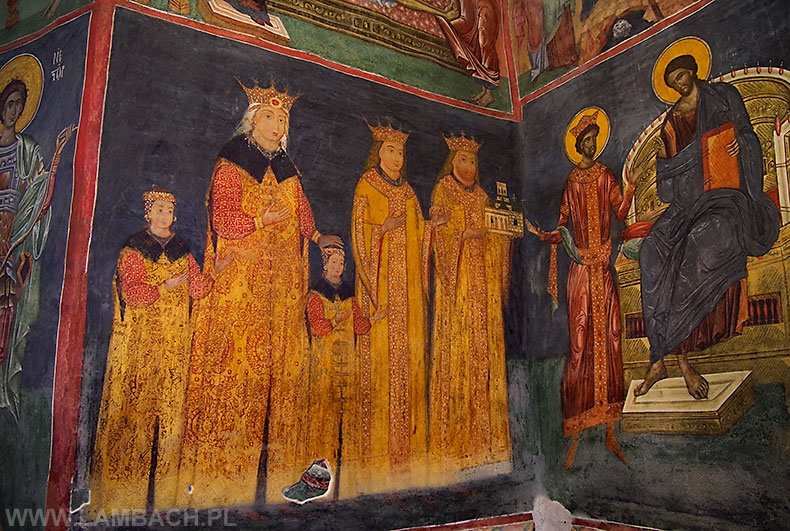
Built in 1487 and dedicated to the Holy Cross, the monastery at Patrauti is the oldest surviving religious site founded by Stephen the Great. Mural paintings, dating from around 1550, can still be admired on the west facade. Today, only the church and a wooden bell tower are still standing from the original monastic complex.
HUMOR
Founded in 1530, Humor is rather small, but looms large among Bucovina's treasures with a variety of frescoes dating from 1535, including one illustrating the Return of the Prodigal Son and one with a "humorous" depiction of the devil as a woman.
PROBOTA
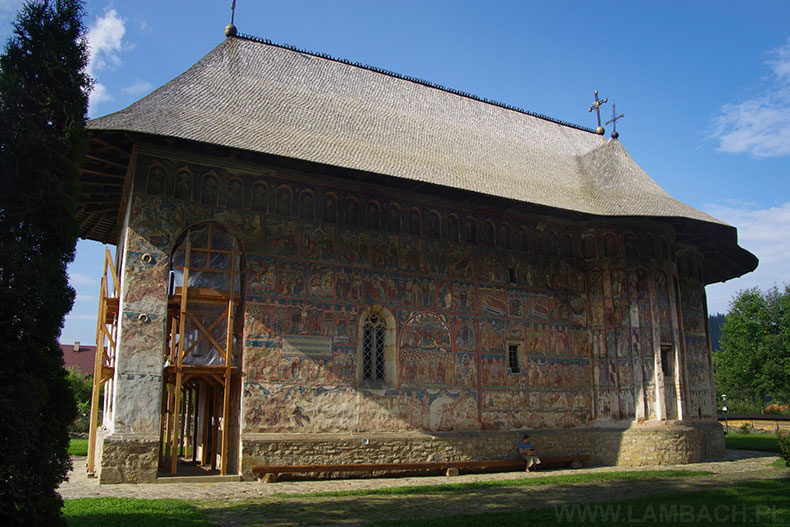
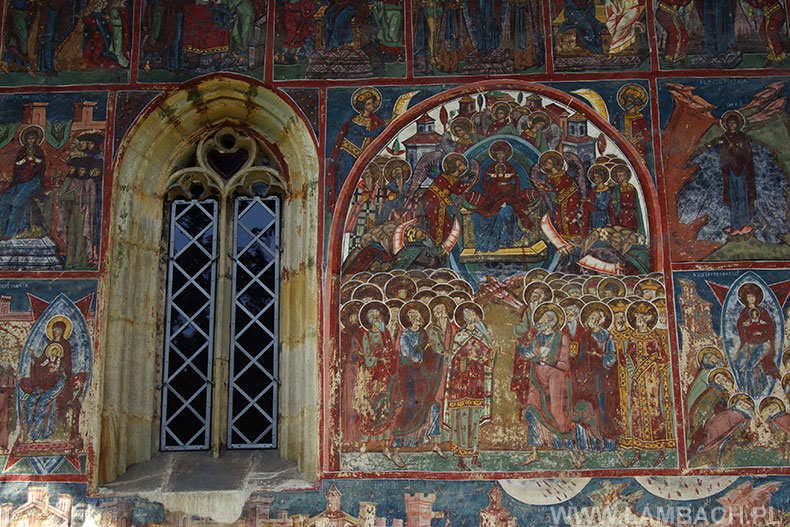
Only the church and the prince's residence remain today from the original ensemble founded by Petru Rares in 1530. In 1532, the church featured both outside and inside frescoes. In the 19th century, a large part of the mural paintings were replaced.
MOLDOVITA
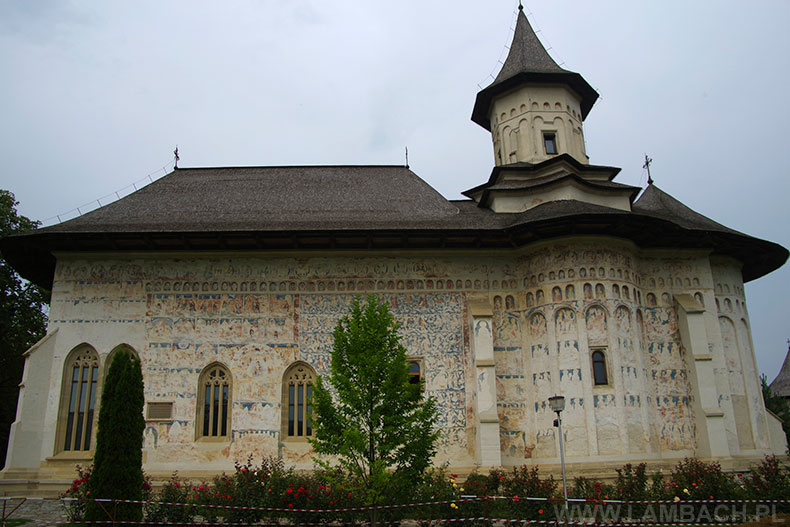
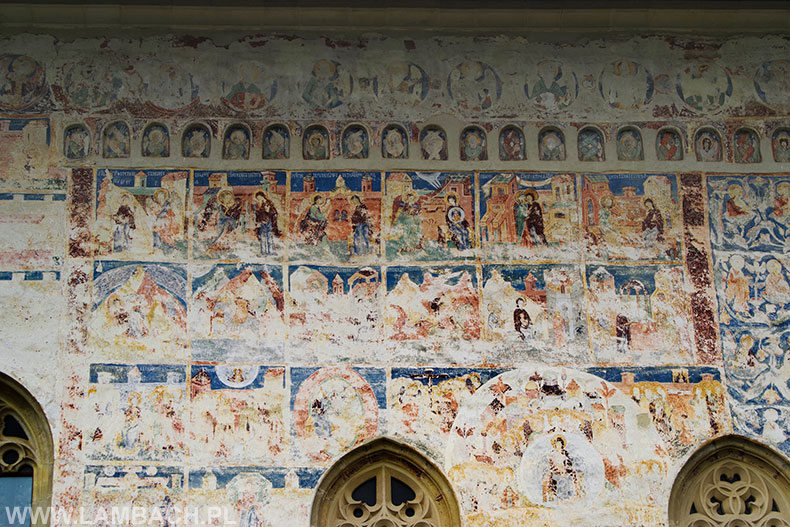
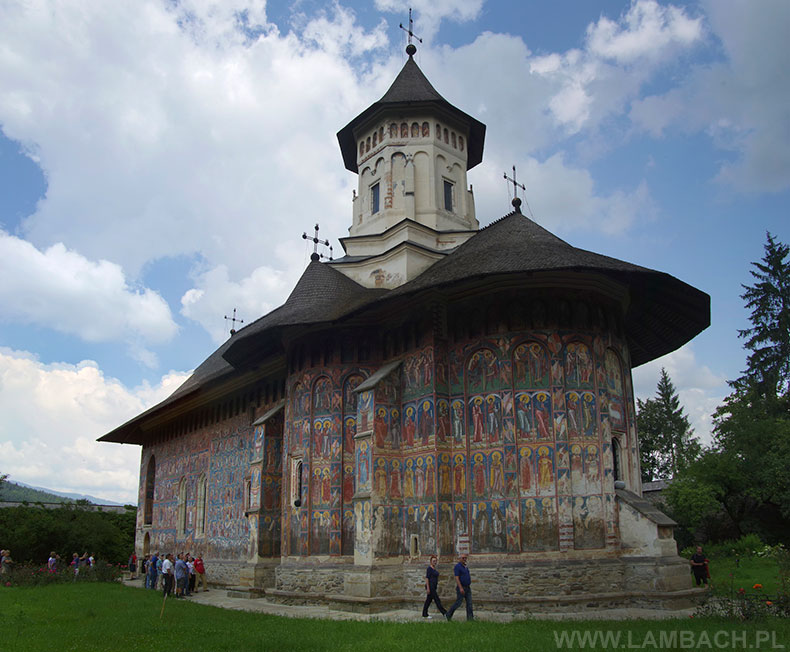
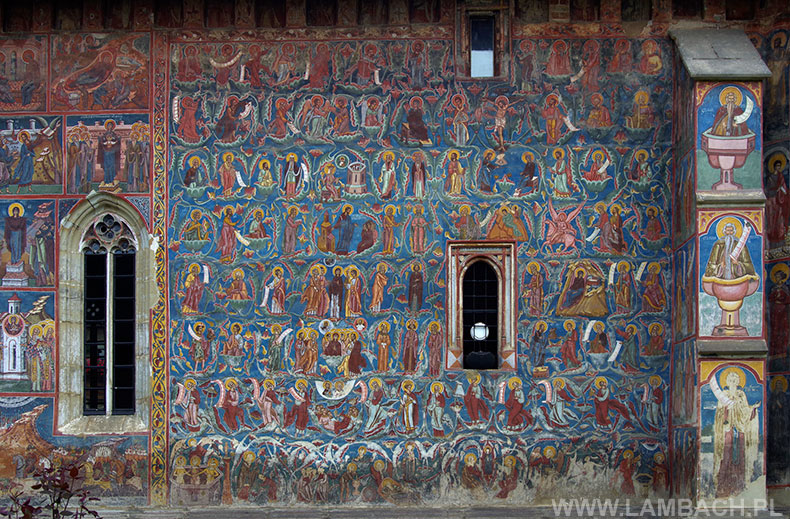
The Monastery of Moldovita, located in the village of Vatra Moldovitei, was built by Petru Rares in 1532. The predominantly gold and deep blue paintings on the exterior walls were completed in 1537. The large and vivid Siege of Constantinople highlights the frescoes.
SUCEVITA
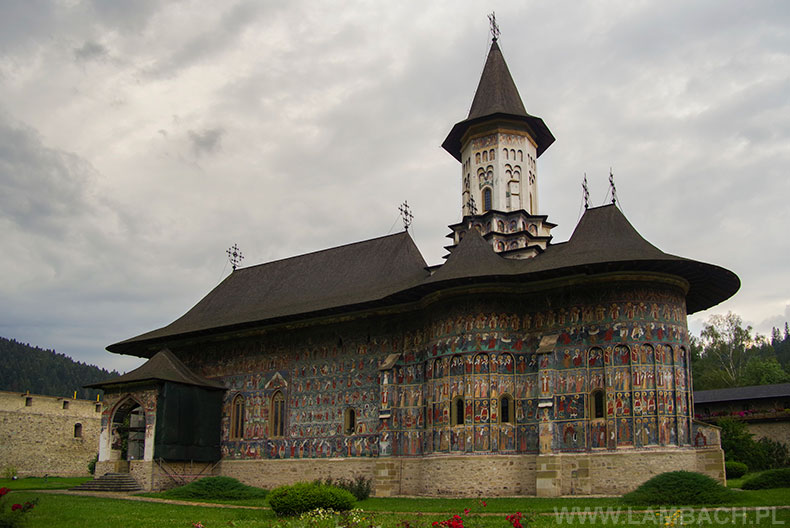
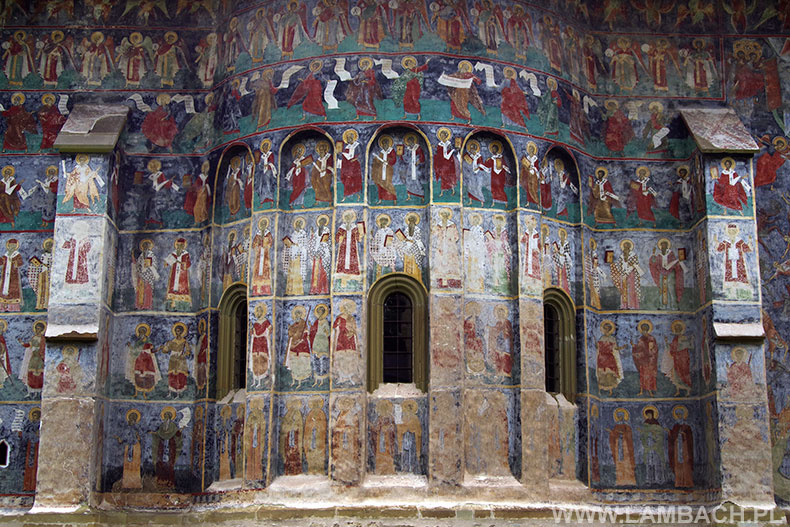
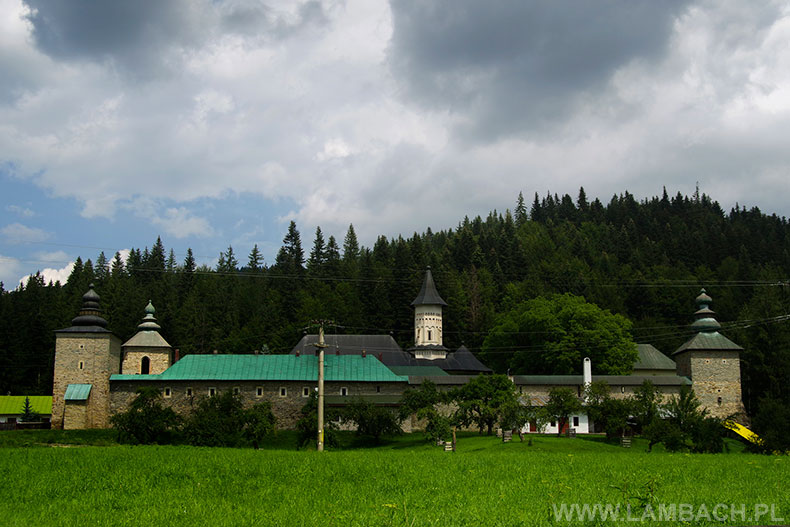
High walls and heavily buttressed defensive towers surround the great monastic complex of Sucevita, giving it the appearance of a fortress. An elegant steeple resting on a star-shaped base tops the church. Massive eaves protect the outside frescoes, painted by local artists in 1602-1604.
SAINT JOHN THE NEW MONASTERY
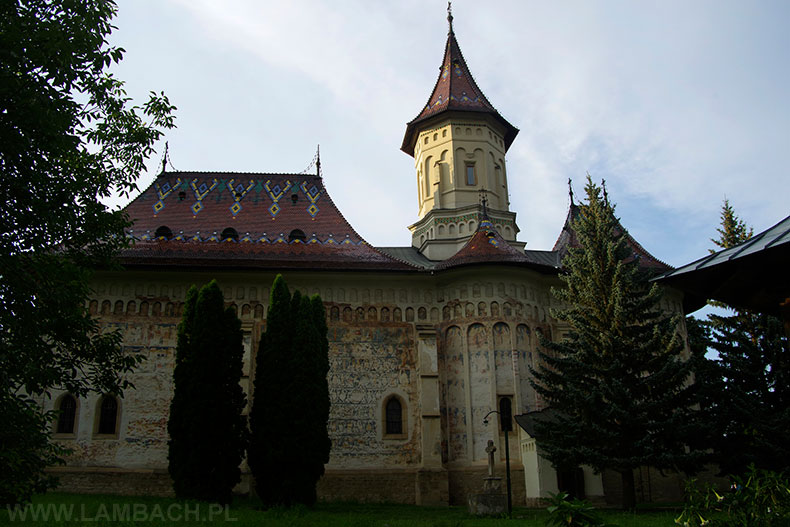
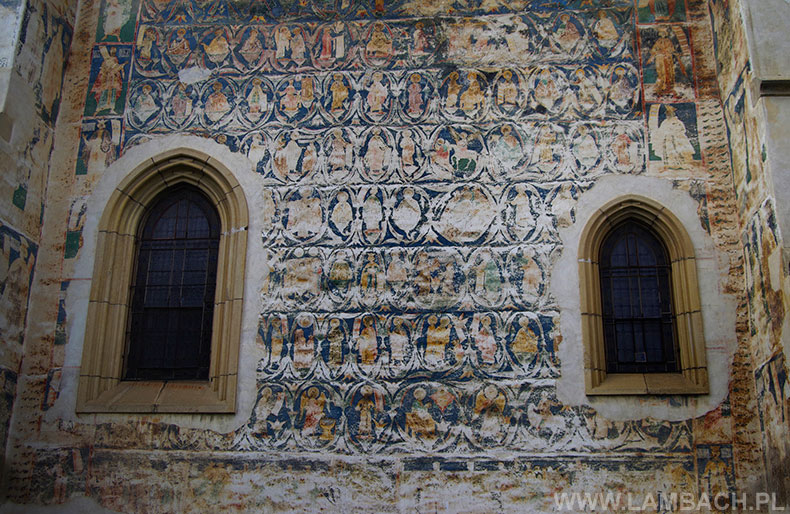
Built between 1514 and 1552 to serve as the Metropolitan Church of Moldavia, Saint John the New Monastery is now the seat of the Archbishop of Suceava and Radauti. The outstanding exterior frescoes, illustrating scenes from the Old and New Testament, were completed in 1534 during the reign of Petru Rares.
NEAMT
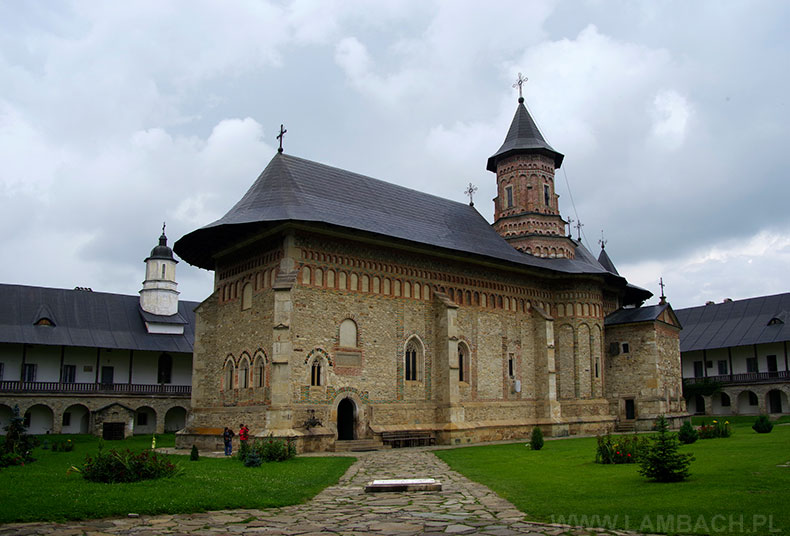
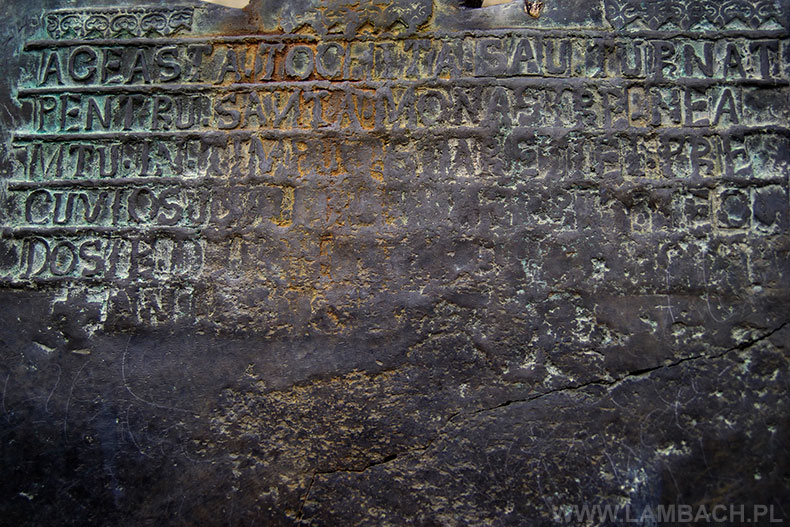
The 14th-century Neamţ Monastery is Romania's oldest and largest male monastery. Founded by Petru I Muşat, it doubled as a protective citadel. Ştefan cel Mare built today's large church in the 15th century, though some of the paintings date from Muşat’s time.
SLATINA
The church of the monastery was built in 1553-1564 by prince Alexandru Lapusneanu, in an especially beautiful location. The inside of Slatina Monastery has a quadrangle, irregular shape. The surrounding walls made of river stones with rocks at the corners, have ramparts and guard road.
RASCA
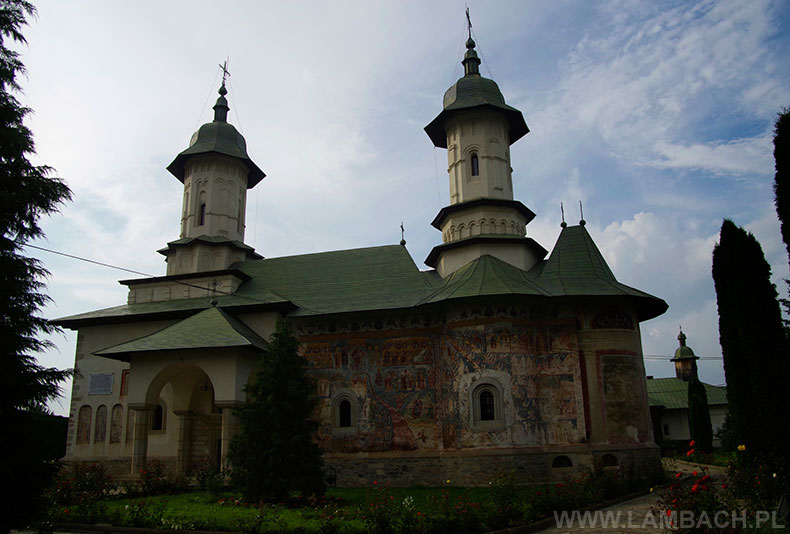
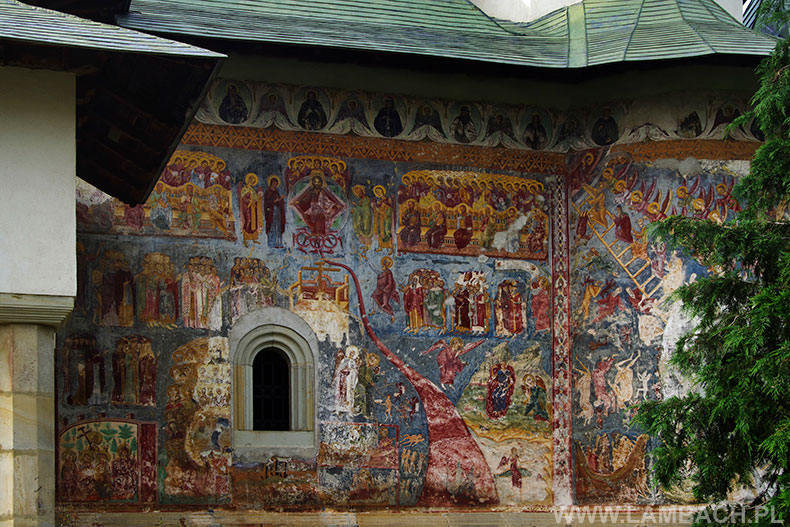
Rasca monastery is one of the famous painted monasteries of the Bucovina region due to the 16th-century frescos present on the exterior of its church. It was built between 1541-1546 by Petru Rares, the prince of Moldavia. The Monastery suffered plundering by Turks and an earthquake in the 19th century, after which parts of it were renovated in a more contemporary style for the time.